
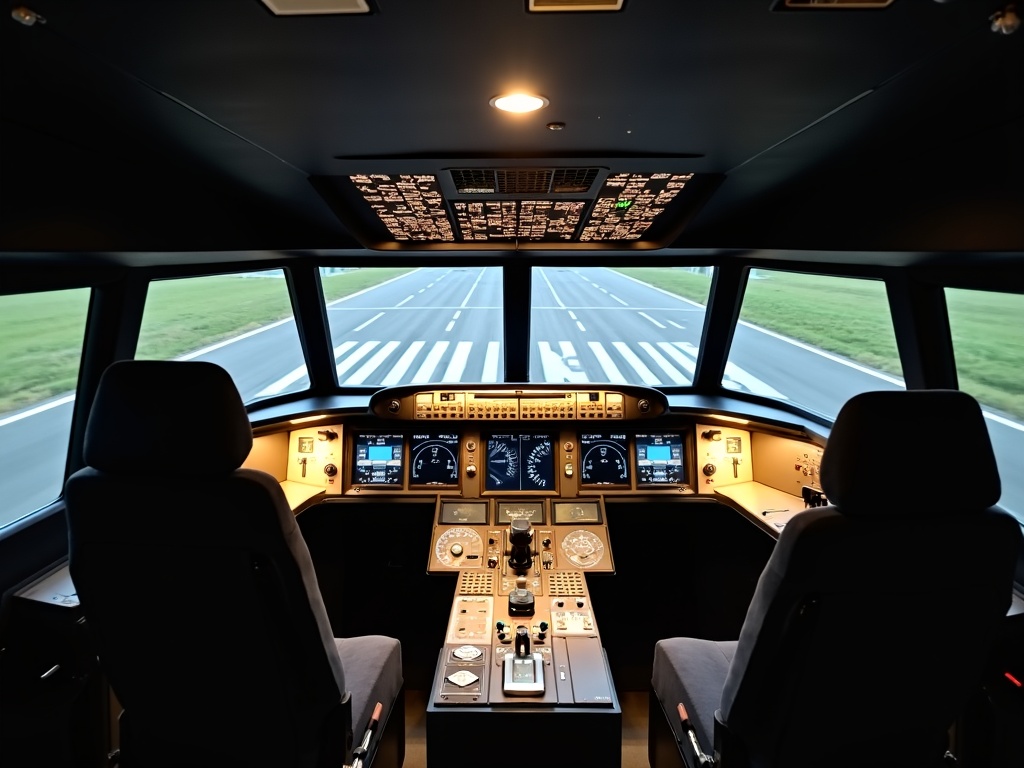
Most people think of flight simulators as simple computer games where people fly around the virtual skies for fun. But, among aviation enthusiasts, there is a whole subculture of fans of this hobby who are taking it to unimaginable lengths by building home cockpits that look like and feel like are training for an airline.
These serious sim pilots spend a tremendous amount of time and sometimes tens of thousands of dollars building an astonishingly intricate virtual cockpit in their spare bedroom, basement, or garage. What might have begun as casual gaming has turned into something more akin to building an aircraft with real switches, dials, and control systems which replicate real aviation equipment.
The level of consumption still surprises someone coming from the outside. Casual gamers might simply use a joystick and keyboard to control orientation coordinates, but diligent flight simmers build out full cockpit replicas with working instrument panels, realistic levels for trimming the aircraft, and also modify something called a motion platform in which to simulate the feeling of flying to an extent.
Building Beyond Gaming
The process of construction usually starts small. An individual starts with basic flight simulation software and a plugin for a gaming console; they start to become obsessed with the level of realism the can achieve, aka true-to-life flying in a simulation. They start to notice that their generic joystick simply just doesn’t feel right or that clicking mouse buttons to turn on/off switches in the virtual cockpit defeats the whole purpose of immersion in the simulation.
Then they think, okay I should get some new hardware to help with the level of realism i’m trying to achieve; and like most other things, once you start upgrading with the hardware it can go in many different directions, and deep. For those who move forward and toward the end stage of the improvement process, they are probably building actual instrument panels with working airspeed indicators, altimeters, radio stacks with knobs, and switch panels with up to 30 switches and a couple of displays related to underlying process.
Builders take the attention to detail to an almost obsessive level. Builders will find actual aircraft manuals to learn where the switches will take the most optimum position similar to those found in an actual flight deck. Builders will go online to find photos of the inside of the aircraft and route the wiring exactly where the real wiring would be run and the panels would need to be laid out just right. Some builders will even find actual aircraft components, although builders more frequently purchase components from companies that specialized in producing high quality flight simulation instruments engineered specifically for home cockpit builders.
The Community Element
A part of what is fascinating about this hobby is the community that starts to develop and thrive. A few discussion forums online and it seems almost every hour of a day there is a posted thread about something technical about routing the aircraft wiring, setting up the software for running, and building it correctly. These builders are so quick to share their share their photos of their newest, ongoing builds, help each other troubleshoot if issues arise and post if they are making any progress towards or reaching milestones in their build.
The sharing of information and experiences about sim is not for sharing gaming tips. In these communities, there are really pilots, aircraft mechanics, electrical engineers, and software developers that actually know the aircraft with the components, that adds another layer of experience if some kind of “simulation” issue arises. You get a member or member to post about trying to build or replicate some piece of the specific aviation system and within a couple of hours what felt like a dozen people jump in with lengthy technical references from pilots or members with real aviation backgrounds.
There were regional meet-up and conventions organized so builders could showcase their ongoing creative projects, but for me what kept sucking me was simply the amount of people there to show some cool setups. Walking through those meet-ups and conventions looking before hundreds of builds felt more like strolling through an aircraft museum, rather than going to a GA fast-pass gaming convention. The building composition and understanding of all the technical detail within each display recreate memories of commercial aircraft simulator training and experience.
In each meeting the challenge to produce realistic experience of a flight sim develop technical skills that advance beyond just building a gaming experience. Those who practice building a cockpit successfully often develop skills in a variety of areas such as electronics, woodworking, metal fabrication, and computer programming. They learn how to deal with aviation-grade components while obtaining a basic working knowledge of electrical systems and proficiency in configuring complex software packages.
The software portion of flight simulation can often be overly complicated on its own. The modern flight simulation experience relies on a coordination of several applications to handle different aspects of the experience. One piece of software may operate the flight model and scenery while another displays instrument information, another controls the lights, and yet another is required to deal with radio communication with virtual air traffic control.
For the home builder, coordinating all of these systems so that they work together in unison requires a great deal of technical knowledge and patience. In fact, it is common for a builder to spend more time trouble-shooting software configurations than actually flying their simulator. For many, however, overcoming the technical challenges to create a pleasant experience are part of the thrill.
Why the Level of Realism would Matter
Having encountered this scenario, outsiders wonder why anyone would invest so much time and money for what is a giant video game. For dedicated flight simulation hobbyists, the experience is more than just a game.
Most builders of flight simulators or cockpit recreation are either currently pilots or formerly flew. Part of the experience is using their simulator to maintain a certain level of proficiency or practice procedural situations. The level of realism from the controls and instruments allows them a place to practice scenarios from their own respective simulator with the ability to safely rehearse a seemingly dangerous situation. As an aside, some builders go as far as to practice case scenarios in their home setups that gang preparatory experience for actual flight training, or experience practicing for flight in specific aircraft types.
There were also enthusiasts of aviation who may never become pilots. They use flight simulation setups in efforts to achieve whatever possible connection to aviation. The experience of building a space that resembles the cockpit environment goes some ways of bridging the experience of flying, as they will never be pilots.
The Future of Home Flight Simulation
The technology is continuing to advance rapidly. In the modern era, virtual reality headsets create an unbelievably realistic immersive aviation visual experience where the cockpit controls are physical components. Haptic feedback systems create the experience of tactile sensations and the motion platforms are replicating the physical forces of flight better and better.
Meanwhile, the community continues to grow and grow as more and more people discover the activities in this quiet realm of ultra-realism. A niche hack or hobby by a few serious enthusiasts, flight simulation seems to be becoming a more widely accepted practice by those searching for life beyond their video game experience, while bridging the gap of gaming and pilot proficiency training.
The fidelity these builders strive for when recreating a realistic flying environment and appliance of aviation involves conversation between gaming and engineering. The cockpit representations these builders are recreating may arguably be the most sophisticated home-built electrical systems in an advancing area of the economy, all in the interest in pursuit of giving themselves as real a flying experience as they can have in their lives.
If you just happened to find yourself in this world, either as a curious gamer or flying enthusiast, the depth of this community would be hard to ignore. The experience may begin as mere interest in flight simulation, but the investment becomes something other than time after it becomes potentially a lifetime pursuit and contribution of obtaining an ever more nostalgic experience and Technical achievement.
Leave a Reply